The retrospective
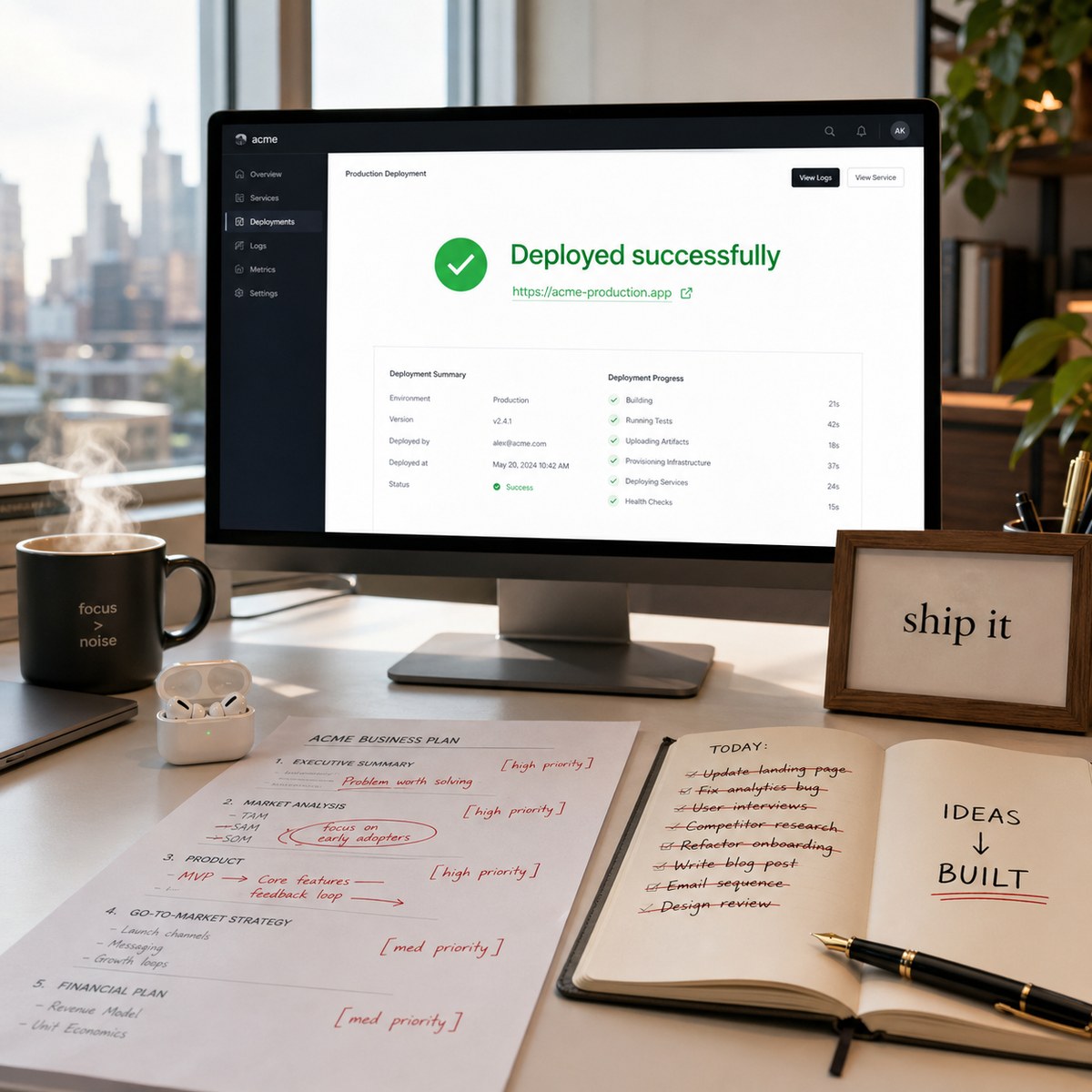
The notebook in front of me has a timeline. Jan '23 to Jul '24. Five projects, each in its own column:
- Project 01, GreenEcoGenius: B2B circular economy platform
- Project 02, I See You Feel (ISYF): Premium minimalist fashion brand
- Project 03, NovaPulse Creative: Digital launch agency
- Project 04, Vantage Magazine: AI-powered intelligence publication
- Project 05, ErvisAI: Personal AI infrastructure
Five projects. Eighteen months. Different industries, different audiences, different revenue models. So why did I build them in parallel instead of one at a time?
The cross-pollination thesis
Conventional wisdom: focus on one thing, ship it, scale it.
What I actually did: build five things that share infrastructure, design systems, and learnings.
Here's the secret most "build one thing" advice misses: the bottleneck for most projects isn't engineering, it's domain understanding. And domain understanding compounds across projects more than you'd think.
Concrete cross-pollinations
- The auth/billing stack I built for GreenEcoGenius (Supabase + Stripe webhooks) became the foundation for ISYF's Shopify integration logic.
- The editorial CMS approach for Vantage Magazine taught me content patterns I now use for NovaPulse Creative's blog and case studies.
- The brand identity work for ISYF became my reference for how to talk to NovaPulse clients about brand strategy.
- The AI integration patterns from ErvisAI are what made Vantage Magazine's AI-augmented research workflow possible.
- The blockchain traceability work in GreenEcoGenius (Polygon certificates) is now a feature I can offer to NovaPulse clients in regulated industries.
You can't get this kind of compound learning from "focus on one thing."
The lessons
1. Stronger together
Projects share infrastructure. I have one Supabase setup that powers three projects. One design system foundation. One analytics philosophy. The marginal cost of project N+1 keeps decreasing.
2. Failure is cheap when bets are small
Not every project hit. ISYF's first capsule didn't sell as expected. Vantage's first English-only version had less traction than the bilingual relaunch. ErvisAI was rebuilt three times. Because each project was bounded, failure didn't mean catastrophe, it meant data.
3. Better outcomes through diversity
The clients I attract for NovaPulse Creative come because they see the breadth: someone who built a B2B SaaS, a fashion brand, a magazine, and an agency probably understands their problem. Specialization is overrated for solo builders. Range is your moat.
4. The compounding portfolio effect
Each project makes the next one easier to launch. Not just because of shared code, because of the credibility curve. After project five, no one asks "can you really build this?" They ask "what should we build first?"
What I'd do differently
- Start with a kept-private personal product first. ErvisAI is the most useful thing I built, but I built it last. If I'd had it from day one, the other four projects would have shipped in half the time.
- Design system as cathedral, not vendor lock. I rebuilt my design tokens too many times. Choose once, defer aesthetic perfectionism, ship.
- Document the cross-pollinations earlier. I didn't realize until project four how much was carrying over. If I'd kept a "transferable patterns" notebook from day one, I'd have moved faster.
The real takeaway
Building in public isn't about Twitter threads. It's about treating each project as a public artifact that compounds your future.
Five projects in eighteen months sounds like a lot. It's actually slower than building one project well, but each one teaches you something the next one inherits. After eighteen months, you don't have one product. You have a system of products and a method for building more.
That's the moat.
Curious how this applies to your own building? Let's talk about what to ship next.